Search engine optimization tutorial for beginners 2026
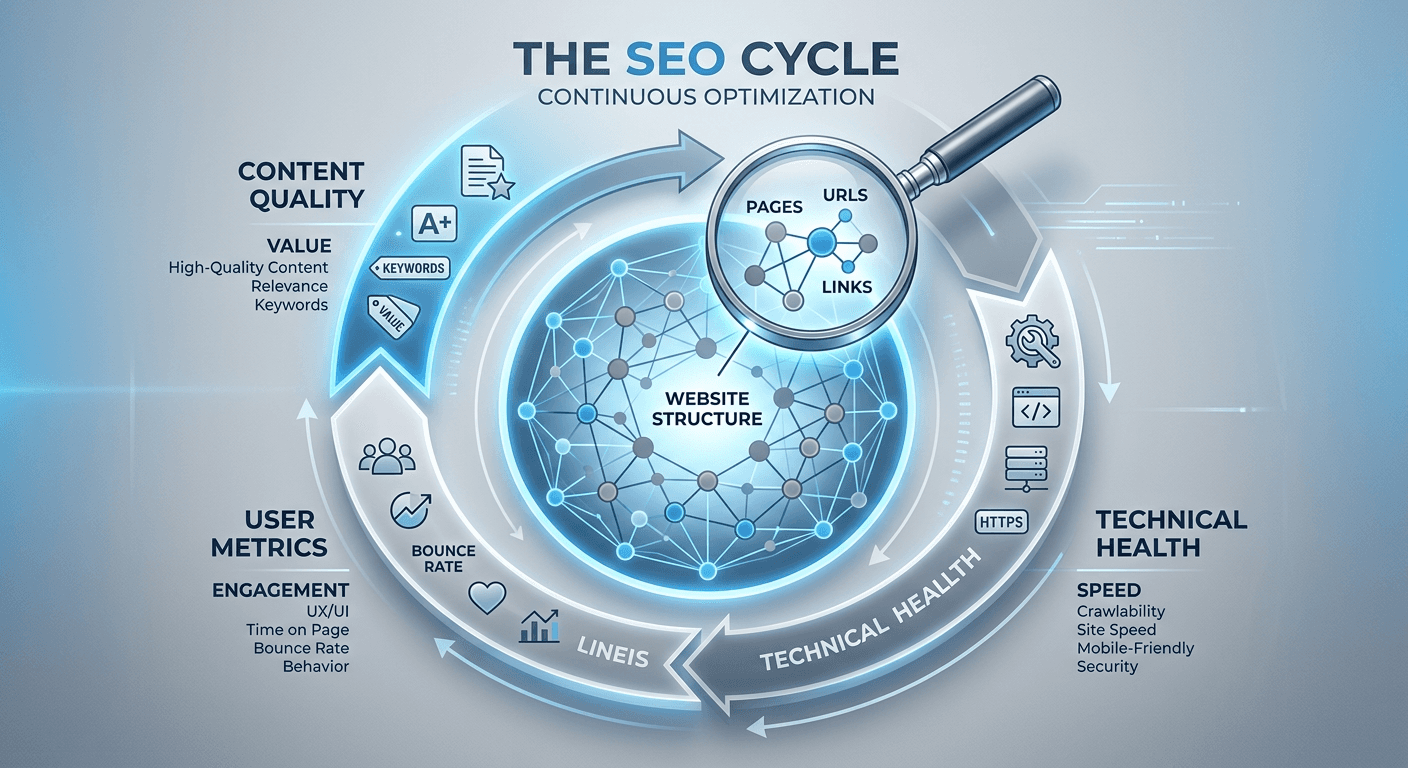
Optimizing a digital presence for search engines is a foundational requirement for any organization that relies on discoverability to reach its audience. At its core, search engine optimization is the systematic process of improving a website's technical structure, content relevance, and link authority to ensure that search engines can crawl, index, and surface the site when users enter relevant queries. Rather than viewing this as a single technical task, effective practitioners treat it as a continuous cycle of auditing, content creation, and performance analysis that aligns a website with the evolving requirements of modern algorithms.

Quick Summary
Search engine optimization is the practice of refining a website to improve its visibility and ranking in search engine result pages (SERPs). By focusing on user intent, technical site health, and authoritative content, organizations can drive sustained organic traffic without relying solely on paid advertising.
- Perform regular technical audits to ensure site indexability.
- Create high-quality, relevant content that addresses specific user needs.
- Build internal and external links to establish topical authority.
- Monitor performance using analytical data to refine strategy.
Table of Contents
- The Fundamentals of Search Engine Optimization
- How to Conduct Keyword Research Effectively
- Optimizing On-Page Content and Structure
- Technical SEO and Site Architecture
- Common Pitfalls and Troubleshooting
- FAQ
- Recommended Reads
The Fundamentals of Search Engine Optimization
Search engine optimization, or SEO, is the engine that drives organic visibility in an era where AI-driven discovery is becoming the norm. For nonprofits, universities, and research institutions, the primary goal is often to ensure that academic publications, donor outreach, and student resources appear accurately in search results. The process begins with understanding that search engines operate as massive library indices that must categorize information to provide the most helpful response to a user's question.
Successful implementation requires balancing technical infrastructure with user-centric content. If a website is technically broken - suffering from slow load times or insecure connections - search engines may struggle to crawl the content effectively. Conversely, even a technically perfect site will fail to rank if the content lacks depth or fails to align with the specific intent of the user. Understanding this balance is the first step in any seo digital marketing course that aims to move beyond superficial rankings.
How to Conduct Keyword Research Effectively
Keyword research is the process of identifying the specific phrases your audience uses when searching for information related to your organization. This is not about "stuffing" your pages with terms, but rather uncovering the underlying intent. A critical concept here is understanding what is long-tail keyword in seo. Unlike broad, high-volume terms, long-tail keywords are highly specific phrases that often indicate a user is closer to a specific goal or query, such as "how to apply for environmental science grants in California" rather than just "science grants."
To conduct research, start by mapping out the core pillars of your organization. Use tools that allow you to explore search volume and difficulty, focusing on queries that have lower competition but higher relevance to your mission. Group these keywords into thematic clusters, which helps search engines recognize the site as an authority on a specific subject rather than just a collection of disconnected pages.
Optimizing On-Page Content and Structure
Once keywords are identified, they must be integrated naturally into the content. This practice constitutes a core part of any comprehensive seo marketing guide. On-page optimization involves ensuring that your headers (H1, H2, H3), meta titles, and descriptions clearly communicate the page's content. A page's title should be concise and descriptive, while the body copy should provide comprehensive answers to the user's query.
Beyond text, structure matters. Use descriptive image alt text for accessibility and schema markup to help machines understand the entity relationships on your page. Ensure that content is formatted with scannable lists and clear subheadings so that both humans and AI bots can easily parse the core value of the material. Avoid keyword saturation; prioritize readability, as modern search engines prioritize content that keeps users engaged.
Technical SEO and Site Architecture
Technical SEO involves the behind-the-scenes engineering that allows search engines to interact with your site. This includes managing site speed, ensuring mobile-friendliness, and implementing robust security measures like HTTPS. For large institutions, maintaining a logical site architecture is essential; users and crawlers should be able to navigate from the homepage to any important page in three clicks or fewer.
Pro Tip: Regularly review your site's "crawl budget" by monitoring which pages are indexed versus which are excluded. Use canonical tags to prevent duplicate content issues when multiple versions of a page exist, ensuring search engines point to the primary source of truth.
Common Pitfalls and Troubleshooting
Common errors often stem from a lack of technical maintenance. Broken internal links, orphaned pages that have no incoming links, and slow response times are frequent culprits for poor ranking performance. Troubleshooting these issues typically involves running a deep crawl of your site to identify 404 errors and redirecting them to relevant, active content.
Another frequent mistake is neglecting mobile usability. Since search engines now primarily use the mobile version of websites for indexing and ranking, a site that looks great on a desktop but fails on a phone will inevitably lose visibility. Ensure your CMS uses responsive design and that interactive elements are easily clickable on touchscreens.
FAQ
- What is the most important factor in SEO? Content relevance and user intent are generally considered the most important factors. If your content does not answer the user's question, no amount of technical tweaking will sustain a high ranking.
- How long does it take to see results? SEO is a long-term strategy. Depending on the competitiveness of your field and the current health of your site, it often takes between three to six months to see consistent growth in organic traffic.
- Why are long-tail keywords better than short-tail? Long-tail keywords usually have less competition and a higher conversion rate because they represent a more precise user intent, allowing you to capture a more qualified audience.
- Do I need to pay for an SEO tool? While premium tools offer deeper insights, much of the initial foundation can be built using free search console data and manual auditing techniques to fix indexation issues.