Integrating SEO Tools for Digital Marketing for Sustainable and Structured Growth
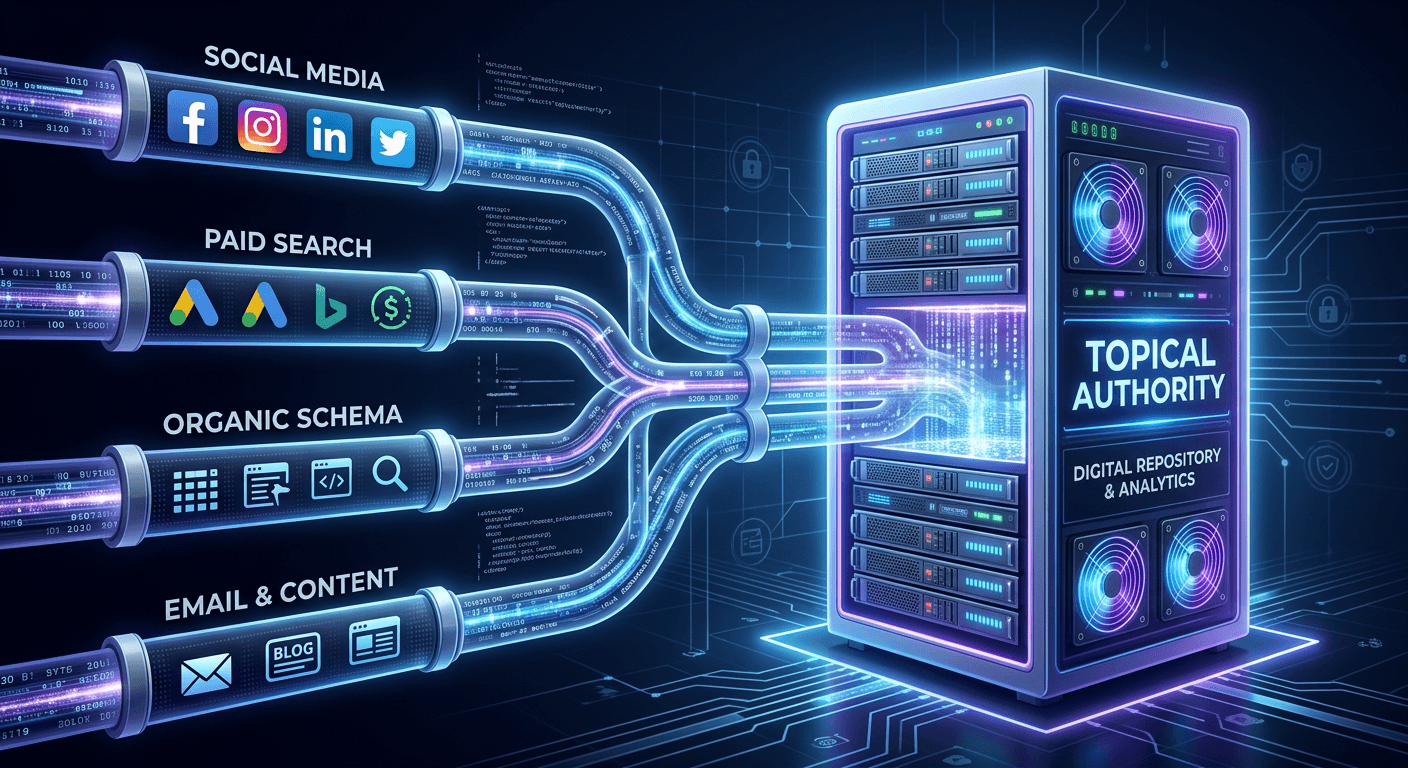
The belief that search engine optimization is merely a post-launch checklist item is the single most expensive assumption in modern digital management. When a digital content manager isolates search from paid media, social campaigns, and email, they doom their channel performance to isolated, high-cost acquisition cycles. True growth happens when organic visibility is baked into the initial system architecture, aligning every piece of content with how search engines - and modern AI search engines - crawl and evaluate authority. Choosing the right seo tools for digital marketing is not about finding a magic dashboard; it is about building a unified data loop that feeds your entire strategy.
Quick Summary
Integrating search engine optimization with your digital marketing channels transforms organic search from an isolated acquisition tactic into a foundational data engine. By aligning keyword intent with paid media, PR, and content marketing, organizations build sustainable, cross-channel authority that survives algorithmic shifts.
- Channel Alignment: Bridge organic data with paid search to lower customer acquisition costs.
- Semantic Architecture: Organize content around topical authority, not just single keywords.
- AI Visibility: Adapt traditional search optimization for AI-driven engines and LLM crawlers.
- Unified Analytics: Track multi-touch attribution to prove the cross-channel value of organic search.
Table of Contents
- Why Siloed Channels Fail and How to Choose SEO Tools for Digital Marketing
- Search Engine Optimization Must Anchor Your Entire Funnel
- Organic Search and Paid Media Are Not Competitors
- Content Strategy Breaks Down Without Semantic Architecture
- How to Measure the True Business Value of Search Integration
- Comparative Analysis of Integration Frameworks
- FAQ
- Recommended Reads
Why Siloed Channels Fail and How to Choose SEO Tools for Digital Marketing
Siloed marketing channels waste capital and dilute brand authority. When your email marketing, pay-per-click (PPC) ads, and organic content strategies operate in isolation, you duplicate production costs and present fragmented messaging to your audience. For example, a university administrator might launch a paid search campaign targeting prospective graduate students while the editorial team publishes deep-dive academic research on the exact same topics without any structured cross-linking or indexation planning. The paid team pays high costs per click for traffic that immediately bounces because the landing page lacks the authoritative depth of the academic team's organic content.
Solving this requires selecting the right seo marketing software to act as a bridge between channels, rather than another isolated analytics silo. When evaluating these platforms, prioritize API-first architectures that export raw crawl and keyword data directly into your central data warehouse or tag management system. If your software cannot programmatically feed search trends into your social media management tool or email automation platform, it is not serving as a cross-channel asset.
To make an informed software choice, verify three critical capabilities:
- JavaScript Rendering Engines: Traditional crawlers only read flat HTML. Modern search engines evaluate client-side rendered JavaScript. Your tools must simulate these complex headless environments to discover rendering blocks before they impact rankings.
- API Data Portability: Avoid software that forces users to log into a proprietary dashboard to export CSVs. Look for REST APIs that allow automated pipelines to pull search query volume directly into your content management system (CMS).
- Competitor Entity Mapping: The tool should analyze search results based on entity structures, identifying the exact subtopics, schemas, and semantic relationships that authoritative competitors use to win search real estate.
Search Engine Optimization Must Anchor Your Entire Funnel
A common structural failure in digital marketing is treating organic search solely as a top-of-funnel acquisition channel. This approach assumes that searchers only look for high-level informational queries, while bottom-of-funnel conversions should be driven exclusively by paid search or direct email nurturing. In reality, modern search behavior is non-linear. Prospective donors, research partners, or students actively query search engines at every single stage of their decision-making process.
Top-of-Funnel Intent and Content Synergy
At the top of the funnel, searchers look for objective answers to broad questions. If a nonprofit organization is addressing climate policy, top-of-funnel searchers might query "what are the mechanics of carbon offset verification." Capturing this traffic requires a clear semantic architecture that answers the question neutrally and authoritatively. However, the value of this organic footprint is lost if it is not mapped to mid-funnel conversion mechanisms. By integrating your search strategy with your newsletter sign-ups or gated research downloads, you turn anonymous search traffic into known leads that your email automation workflows can cultivate.
Mid-Funnel Validation and Trust Building
Once a user moves to the consideration phase, their search queries become more specific and comparison-oriented. They might search for comparative analyses of different educational programs, or audit reports of charitable foundations. If your organization lacks optimized, authoritative landing pages targeting these mid-funnel queries, searchers will find third-party evaluations that you cannot control.
Practical rule: Never build an informational page without a direct, contextual path to a transactional or relational micro-conversion. If an article answers a broad question, it must programmatically suggest the next logical deeper step - such as a detailed program syllabus download or a webinar registration - aligned with the searcher's exact intent.
Organic Search and Paid Media Are Not Competitors
Treating organic search and paid media as competing channels is a fundamental strategic error. Many organizations believe that if they rank first for an organic term, they should immediately pause their paid ads for that keyword to save money. This binary view ignores search engine results page (SERP) layout changes, click share dynamics, and the psychological impact of double visibility.
The Keyword Value Loop
Paid search campaigns provide immediate, granular data that organic campaigns take months to generate. By running highly targeted PPC ads, you can quickly test conversion rates for specific seo keywords. If a paid keyword converts at an exceptionally high rate, that is your signal to prioritize organic content development for that exact topical cluster. Conversely, your organic search data should guide your paid negative keyword lists. If your organic analytics show that a specific, high-volume query drives thousands of visitors who spend zero time on your site, you must immediately exclude that query from your paid campaigns to avoid wasting ad spend.
Ad Quality Score and Landing Page Alignment
Search engines evaluate ad landing pages using metrics that mirror organic ranking signals: page speed, mobile responsiveness, structural relevance, and user engagement. When you apply company search engine optimization best practices to your paid landing pages, you naturally improve the ad network's Quality Score. A higher Quality Score directly reduces your cost per click (CPC) and improves your ad positioning. This cross-channel synergy demonstrates that technical site optimization is not just an organic play; it is a direct contributor to paid advertising efficiency.
Content Strategy Breaks Down Without Semantic Architecture
Search engines have evolved past simple word-matching algorithms. They now use deep semantic networks to understand the context, relationships, and authority of entities mentioned within your content. If your content strategy relies on writing individual articles targeted at single, isolated keywords, you are building an unstable digital footprint that is highly vulnerable to search engine algorithm updates.
Moving Beyond Flat Keywords to Topical Entities
To build a resilient content strategy, you must organize your digital assets into semantic topical clusters. A central, highly authoritative resource page - the pillar - must be supported by a network of closely related sub-articles. These sub-articles must use precise internal linking to pass authority back to the pillar page. This architectural approach proves to search engines that your organization possesses deep, comprehensive expertise across the entire subject matter.
Furthermore, the emergence of AI search engines and large language model (LLM) search tools requires content to be easily discoverable and highly structured. When AI crawlers scan your site, they do not read like humans; they parse relationships between concepts. Utilizing modern AI visibility and search optimization architectures ensures that your research, publications, and campaign materials are accurately indexed, summarized, and cited by these next-generation search systems.
The Role of Headless CMS and Schema Markup
To feed modern search algorithms and AI engines effectively, your technical framework must separate content creation from the presentation layer. A headless, API-first CMS allows you to deliver content as structured data packages across multiple platforms without design bloat slowing down page load times. This clean data delivery must be paired with extensive schema markup. Schema.org structured data - such as Organization, Course, Article, and Event schemas - provides search engines with explicit, unambiguous definitions of what your content represents, directly increasing your chances of earning rich snippet placements on the search results pages.
Practical rule: Every content asset you publish must include validated, structured Schema JSON-LD nested within the code. Never rely on search engines to guess the relationships between your authors, your research topics, and your organization's legal entities.
How to Measure the True Business Value of Search Integration
Measuring the impact of search integration is notoriously difficult due to multi-touch attribution models and cookie-deprecation limits. Many teams fall into the trap of over-reporting vanity metrics, such as total impressions or raw organic traffic volume, while failing to prove how these metrics impact organizational goals like student enrollment, donor acquisition, or research citation counts.
When search integration fails, it typically presents as one of three distinct analytical problems:
- The Direct Traffic Inflation: Your organic search traffic appears flat, but your direct traffic is soaring. This is often a sign of "dark traffic," where users discover your content via search engines but click through via secure applications, mobile browsers, or private messaging platforms that strip out referral data.
- Brand vs. Non-Brand Dilution: Your organic traffic is increasing, but conversion rates are plummeting. This happens when your content optimization is targeting broad, non-branded informational queries that bring in unqualified visitors, while your high-intent, brand-related search visibility is actually declining.
- The Attribution Blind Spot: Your paid search and social campaigns are taking 100% of the credit for conversions, despite the fact that 60% of those converting users originally discovered your organization through informational organic search articles three weeks prior.
To diagnose which of these failures is holding your reporting back, ask your digital marketing and analytics teams these four diagnostic questions:
- How are we currently segmenting brand versus non-brand search traffic in our analytics dashboards, and are we evaluating their conversion rates independently?
- What percentage of our target organic search landing pages have explicit micro-conversion goals tracked via first-party analytics event engines?
- Are we using a data-driven attribution model that assigns partial conversion value to informational blog posts and research pages, or are we relying on outdated last-click attribution?
- Have we verified that our analytics tags are executing correctly across our entire domain, including subdomains, without dropping referral headers?
Comparative Analysis of Integration Frameworks
To successfully align your digital marketing tactics, you must decide how deeply your organizational workflows will integrate search optimization. The table below outlines the core integration strategies available to modern organizations, comparing implementation costs, structural complexity, and resilience against major search engine algorithm updates.
| Integration Strategy | Implementation Complexity | Primary Focus | Resilience to Algorithm Shifts | Long-Term Cost Efficiency |
|---|---|---|---|---|
| Siloed Strategy | Low | Channel-specific vanity metrics and isolated campaigns. | Low (vulnerable to any algorithm update) | Poor (high paid acquisition costs) |
| Co-existing Strategy | Medium | Shared keyword lists between SEO and paid search teams. | Medium | Moderate (reduces keyword bidding duplication) |
| Fully Integrated | High | Semantic pillar-and-cluster content architecture linked to active conversion pathways. | High | Excellent (compounds organic authority over time) |
| AI-First Semantic | High | Headless structured content delivery with extensive schema and AI chatbot optimization. | Very High (designed for next-generation search engines) | Outstanding (future-proofs content distribution) |
The optimal approach for most mid-to-large-size organizations, especially those in the academic or nonprofit sectors, is the transition toward a Fully Integrated or AI-First Semantic framework. While these approaches demand a higher upfront technical and organizational investment, they build a compounding foundation of digital authority that reduces reliance on volatile, expensive paid media channels over time.
FAQ
How long does it take to see results after integrating search optimization with paid search?
While organic search adjustments can take three to six months to show full ranking impact, the data loop benefits are immediate. Paid campaign insights (such as high-performing ad copy and high-converting search queries) can be applied to your content optimization strategy within days. Similarly, organic technical landing page improvements immediately lower PPC click costs by raising your landing page experience Quality Score.
Why is my high-volume blog post not generating any conversions?
This is usually caused by an intent mismatch. High-volume, informational keywords bring in users looking for quick, high-level answers, not transactions. If your page does not offer a natural, low-barrier next step - such as a newsletter sign-up, a detailed download, or related content links - the user will leave immediately after satisfying their informational query.
How does headless content delivery help my search optimization strategy?
A headless CMS delivers content purely as raw data (like JSON) via an API, decoupling it from the heavy presentation code. This drastically improves page speed and mobile rendering metrics, which are primary ranking factors for search engines. It also allows you to push structured content simultaneously to your website, mobile apps, and syndication partners from a single authoritative source.
Do AI search engines change how we should optimize our marketing content?
Yes. AI engines like ChatGPT and Gemini do not just rank links; they summarize information and cite resources. To be cited, your content must be structured semantically, utilize precise schema markup, and be presented cleanly so AI bots can crawl and parse the relational data without being blocked by complex web design patterns or paywalls.