Top Automated Transcription Services and SEO Tools for Accessible Content in 2026
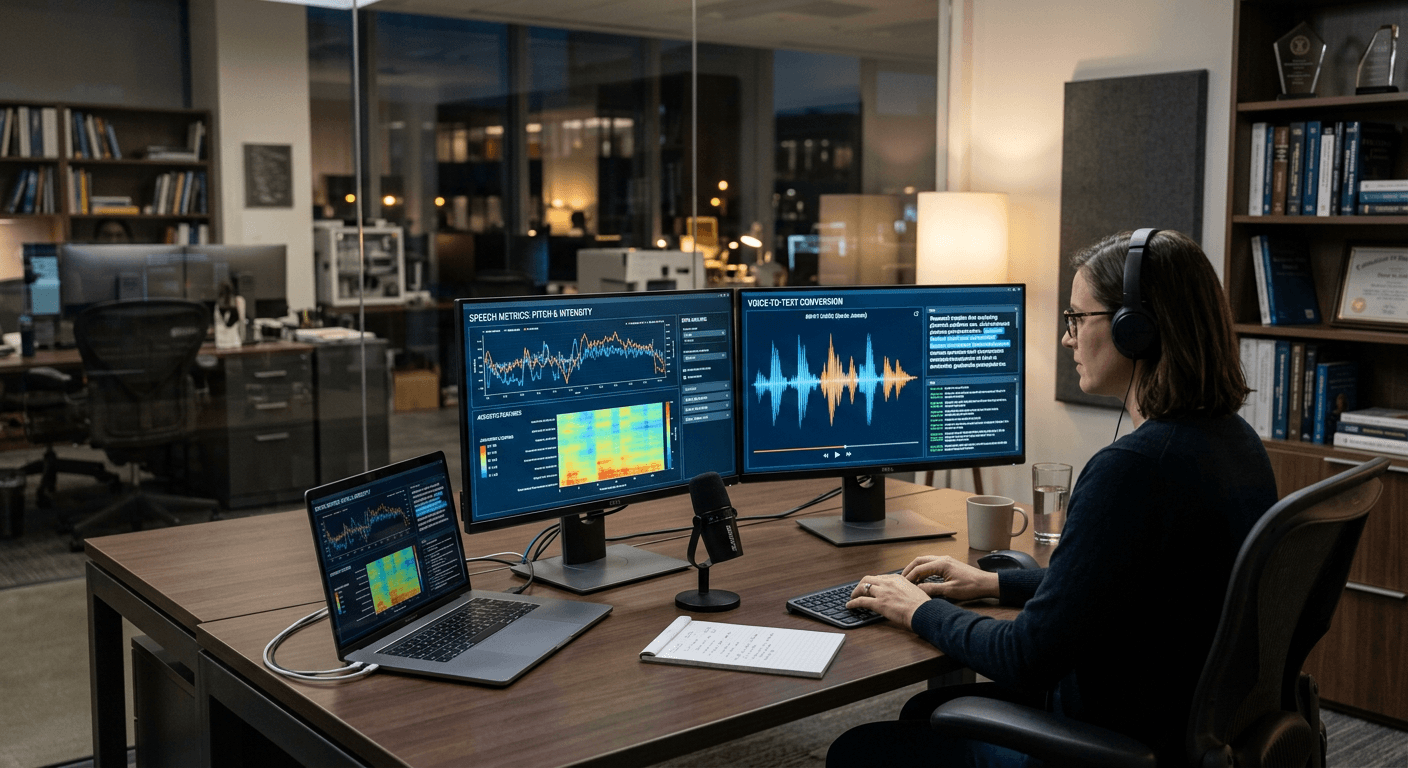
Optimizing digital content for accessibility and search engine discoverability has transitioned from a best practice to an operational necessity for research institutes and nonprofits. By leveraging automated transcription services, organizations can convert spoken audio and video archives into searchable text, effectively unlocking vast libraries of intellectual property for AI indexing and broader audience engagement. This integration is further enhanced when paired with robust optimization frameworks that ensure content is not only accessible but also strategically aligned with current search engine algorithms.
Quick Summary {#quick-summary}
Automated transcription services provide the essential infrastructure for converting multimedia content into indexable text, directly supporting programmatic SEO efforts and accessibility compliance. By integrating these services with advanced search tools, organizations can ensure their research and mission-driven content is accurately surfaced and cited by AI-powered search engines.
- Transcribe multimedia to unlock hidden content value.
- Improve search indexing through high-accuracy text generation.
- Utilize programmatic SEO tools to automate content distribution.
- Enhance organizational authority with structured data.
Table of Contents {#table-of-contents}
- Automated Transcription and Accessibility
- Comparison Table of Transcription and SEO Tools
- Top Automated Transcription and Optimization Categories
- Buying Guide - How to Choose the Right Tools
- FAQ
- Recommended Reads

Automated Transcription and Accessibility {#automated-transcription-and-accessibility}
Automated transcription serves as the bridge between raw, inaccessible media and structured, discoverable data. For universities and foundations, the sheer volume of recorded lectures, panel discussions, and interviews often remains trapped behind a "media wall." By utilizing sophisticated speech-to-text engines, these institutions can generate accurate transcripts that allow search crawlers to scan, categorize, and reference the specific ideas contained within audio-visual files. This process is critical for maintaining privacy and data standards while ensuring compliance with accessibility mandates.
Furthermore, the utility of a transcript extends beyond simple search engine visibility. When transcription is combined with a programmatic SEO tool, organizations can automatically repurpose those transcripts into blog posts, summary articles, or FAQ sections. This content scaling strategy ensures that every piece of recorded output serves multiple purposes, from academic citations to public-facing educational resources. Organizations seeking to streamline these workflows often rely on comprehensive platform policies to ensure their infrastructure remains scalable and secure.
Comparison Table of Transcription and SEO Tools {#comparison-table-of-transcription-and-seo-tools}
| Category | Key Strengths | Best For | Technical Overhead |
|---|---|---|---|
| Cloud Transcription Suites | High accuracy, multi-language support | Long-form academic lectures | Low |
| Programmatic SEO Tools | Automated content scaling, bulk indexing | Large content repositories | Moderate |
| Integrated Marketing Suites | All-in-one CRM and SEO dashboard | Donor and student engagement | Low |
| Specialized SEO Research Tools | Deep keyword analysis, competitive data | Refining editorial strategy | Moderate |
Top Automated Transcription and Optimization Categories {#top-automated-transcription-and-optimization-categories}
Cloud Transcription Suites
These services leverage neural network-based speech recognition to provide near-instant transcriptions. For research institutes, the accuracy of terminology is the primary differentiator. High-end services in this category offer custom vocabulary training, allowing them to correctly identify academic jargon that standard models might misinterpret.
- Pros: Fast turnaround, high fidelity for technical speech, integrates with various video CMS.
- Cons: Can become expensive at scale; may require human verification for complex accents or specialized research terminology.
Programmatic SEO Tools
When you possess a large library of transcribed content, a programmatic SEO tool helps automate the process of turning that data into search-optimized landing pages. These tools manage the templating, metadata injection, and internal linking structures, allowing a small team of content managers to update hundreds of pages simultaneously.
- Pros: Drastically reduces manual work; ensures consistent metadata across large libraries.
- Cons: Requires a well-structured content base to be effective; can result in thin content if templates are not carefully crafted.
Integrated Marketing Suites
Platforms like the HubSpot SEO tool offer a holistic view, combining email marketing, CRM data, and search optimization in one interface. For nonprofits managing donor relations alongside educational content, this centralization is invaluable for tracking the impact of published transcripts on stakeholder engagement.
- Pros: Unified reporting; easy to link SEO performance to organizational goals.
- Cons: Higher barrier to entry in terms of cost and training; potentially overkill for purely research-focused archives.
Specialized SEO Research Tools
Tools like the Moz keyword tool are essential for the strategic planning phase of your content strategy. While these do not generate content, they provide the necessary intelligence to identify which topics your target audience is actively searching for, guiding your transcription focus accordingly.
- Pros: Excellent competitive research; precise keyword difficulty metrics.
- Cons: Lacks direct content creation or automation capabilities; requires a secondary tool to execute the strategy.
Buying Guide - How to Choose the Right Tools {#buying-guide-how-to-choose-the-right-tools}
Selecting the right suite of tools involves balancing your organizational capacity against your technical requirements. For institutions focused on AI visibility, the priority should be on tools that support structured data and API-first delivery. Always ensure that your chosen services provide robust security features, particularly when handling proprietary research data or sensitive institutional content.
Start by auditing your current output. If you have thousands of hours of audio, your priority is high-volume automated transcription. If your primary challenge is low search traffic on existing transcripts, shift your investment toward programmatic SEO tools that can optimize your metadata at scale. Remember to evaluate the interoperability of these tools; your transcription service should ideally push content directly into your CMS or SEO suite to minimize manual intervention.
FAQ {#faq}
-
How does transcription impact SEO? Transcription makes audio and video content indexable by search engine crawlers, allowing them to "read" the content that would otherwise be invisible to them, which directly improves keyword ranking.
-
What is the difference between a programmatic SEO tool and a standard keyword research tool? A programmatic tool automates the creation and publishing of content pages at scale based on data, whereas a research tool helps you identify which keywords to target in that content.
-
Do I need professional human editing after automated transcription? For high-stakes academic or research content, human review is recommended to ensure 100% accuracy, though modern AI transcription is often sufficient for accessibility captions.