Ecommerce Seo Marketing Tactics That Drive Sales
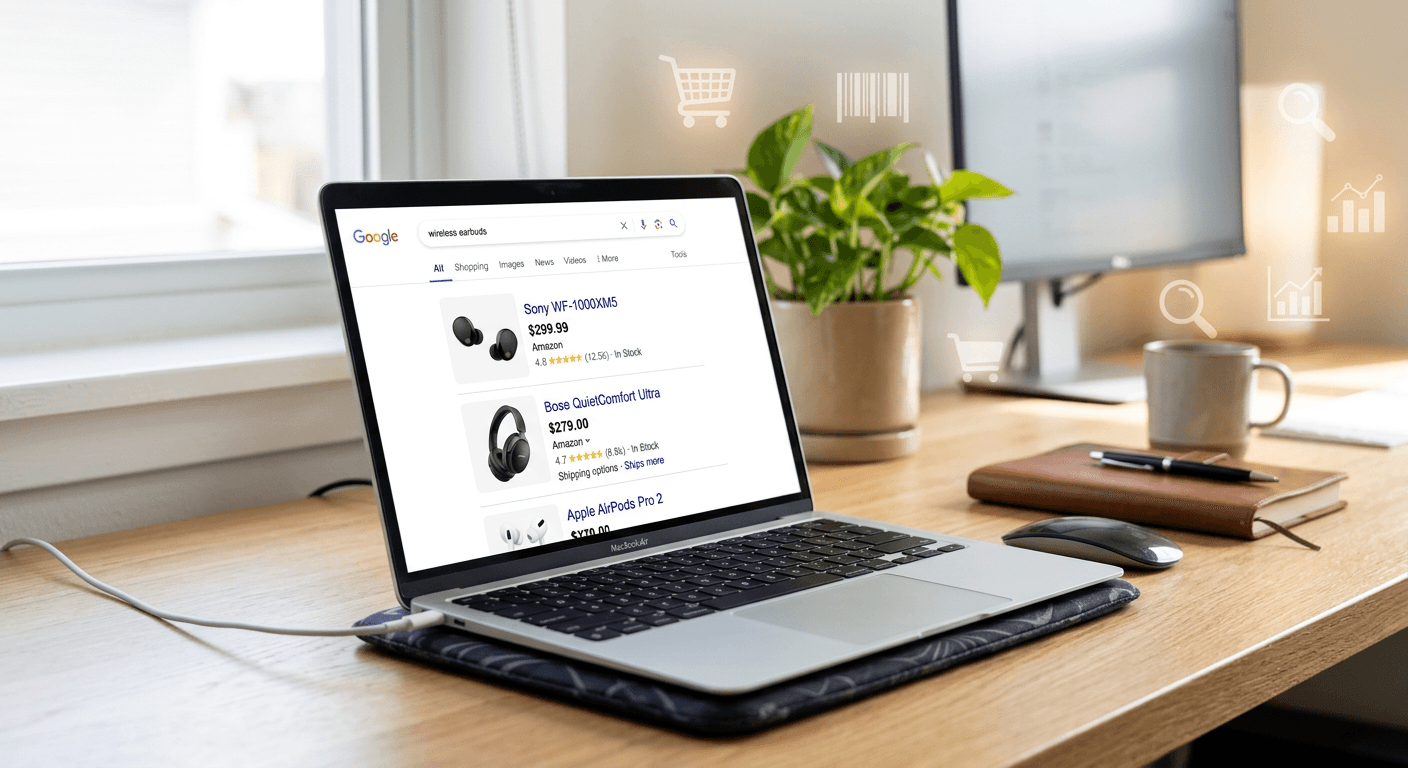
Executing effective ecommerce seo marketing strategies requires a departure from generic content practices - focusing instead on technical precision, intent-driven architecture, and high-conversion UX. To drive sustainable growth, retailers must move beyond basic keyword stuffing and adopt a multi-faceted approach that addresses search engine algorithms while simultaneously solving the user's need for efficiency, product clarity, and mobile accessibility.
Quick Summary {#quick-summary}
Ecommerce seo marketing is the strategic optimization of online storefronts to increase organic visibility, improve user experience, and drive qualified traffic. By balancing technical site health, content-rich product descriptions, and modern search features, businesses can dominate competitive SERPs.
- Prioritize mobile-first indexing to capture high-intent traffic.
- Optimize visual assets for search engines to boost discoverability.
- Leverage rich snippets and multimedia content to increase click-through rates.
- Maintain high site speed to reduce bounce rates and improve rankings.
Table of Contents {#table-of-contents}
- Quick Summary
- Table of Contents
- Structuring Site Architecture for Ecommerce SEO Marketing
- Optimizing Visual Assets for SEO Google Image Search
- Integrating SEO Video Marketing for Product Engagement
- Prioritizing Technical SEO for Mobile Search
- Common Pitfalls and Troubleshooting
- FAQ
- Recommended Reads

Structuring Site Architecture for Ecommerce SEO Marketing {#structuring-site-architecture-for-ecommerce-seo-marketing}
Successful ecommerce SEO marketing begins with a flat, logical site hierarchy. Search engines prioritize websites where products are reachable within three clicks of the homepage. A bloated or overly deep structure forces search crawlers to waste resources, leading to poor indexing of your most important product pages. Use a clear, category-based URL structure that naturally incorporates your primary keywords without keyword stuffing.
Effective internal linking acts as a secondary layer of navigation. By linking from high-authority blog posts or category landing pages to specific product pages, you pass link equity to the items most likely to drive revenue. You can learn more about managing these digital interactions by visiting the RapidWombat resources section.
Optimizing Visual Assets for SEO Google Image Search {#optimizing-visual-assets-for-seo-google-image-search}
Visual discovery is a massive driver of ecommerce traffic. Implementing advanced practices for SEO Google Image Search involves more than just adding alt text. You must ensure your product images are high-resolution, appropriately compressed to minimize load times, and tagged with descriptive, unique file names that include relevant product identifiers. Avoid generic names like "IMG_001.jpg" in favor of specific descriptors like "leather-biker-jacket-black.jpg."
Beyond file naming, use schema markup to provide search engines with context regarding your product, including availability and pricing. This metadata increases the likelihood of your images appearing in rich result carousels, which significantly improves click-through rates. Ensure your images are hosted on a content delivery network (CDN) to maintain speed across different geographic locations.
Integrating SEO Video Marketing for Product Engagement {#integrating-seo-video-marketing-for-product-engagement}
Video content bridges the gap between digital interaction and physical product experience. SEO video marketing works by increasing 'dwell time' on your product pages, a key metric that search engines interpret as a signal of high relevance and quality. Embed product demonstrations or customer testimonials directly onto your category and product pages rather than relying solely on third-party hosting links.
Ensure these videos are properly transcribed. Search engines cannot 'see' the video content, so providing a detailed, keyword-rich transcript allows your video to be indexed for specific search queries. By treating video as a primary content asset, you can capture intent that text-only pages often miss, creating a distinct competitive advantage.
Prioritizing Technical SEO for Mobile Search {#prioritizing-technical-seo-for-mobile-search}
Since search engines now rely on mobile-first indexing, your store's mobile experience determines its overall ranking capability. SEO for mobile search requires a responsive design that automatically adapts to varying screen sizes, touch-friendly navigation, and, crucially, lightning-fast load times. Any element that forces a user to pinch or zoom, or takes longer than three seconds to load, will penalize your search rankings.
Review your server-side performance frequently to ensure your mobile site handles traffic spikes without compromising speed. You can review the underlying technical requirements and operational standards for digital platforms on the RapidWombat terms page. Optimizing your mobile checkout process is equally vital; a streamlined flow that minimizes form fields and supports mobile-native payment methods will increase conversion rates, which in turn reinforces your site's quality signal to search engines.
Pro Tip: Never use pop-ups or interstitial ads on mobile devices. They severely degrade user experience and are actively penalized by search engine algorithms.
Common Pitfalls and Troubleshooting {#common-pitfalls-and-troubleshooting}
One common error is using manufacturer-provided product descriptions. These are often duplicated across hundreds of other stores, leading to 'duplicate content' issues that prevent your pages from ranking. Always write unique, value-driven descriptions that address the customer's specific needs.
Another frequent pitfall is ignoring broken internal links. As you remove or discontinue products, ensure you implement 301 redirects to the most relevant category or updated product. Allowing 404 errors to accumulate signals to search engines that your site is unmaintained, which negatively impacts your authority rankings.
FAQ {#faq}
How long does it take to see results from ecommerce SEO? Generally, significant shifts in rankings require three to six months of consistent optimization, provided the site has a solid technical foundation.
Is it better to focus on product pages or blog content? A balanced strategy is best. Use blog content to target long-tail informational queries that drive awareness, and product pages to capture high-intent transactional search volume.
Do I need to change my URL structure if my site is already indexed? Proceed with caution. Use 301 redirects if you must update URLs, but only do so if the current structure is fundamentally broken or severely hampers navigation.
How does mobile search differ from desktop search? Mobile search prioritizes local relevance, page speed, and immediate usability. If your site is not mobile-responsive, it will struggle to rank regardless of how well your desktop version is optimized.