Best Seo Marketing Practices
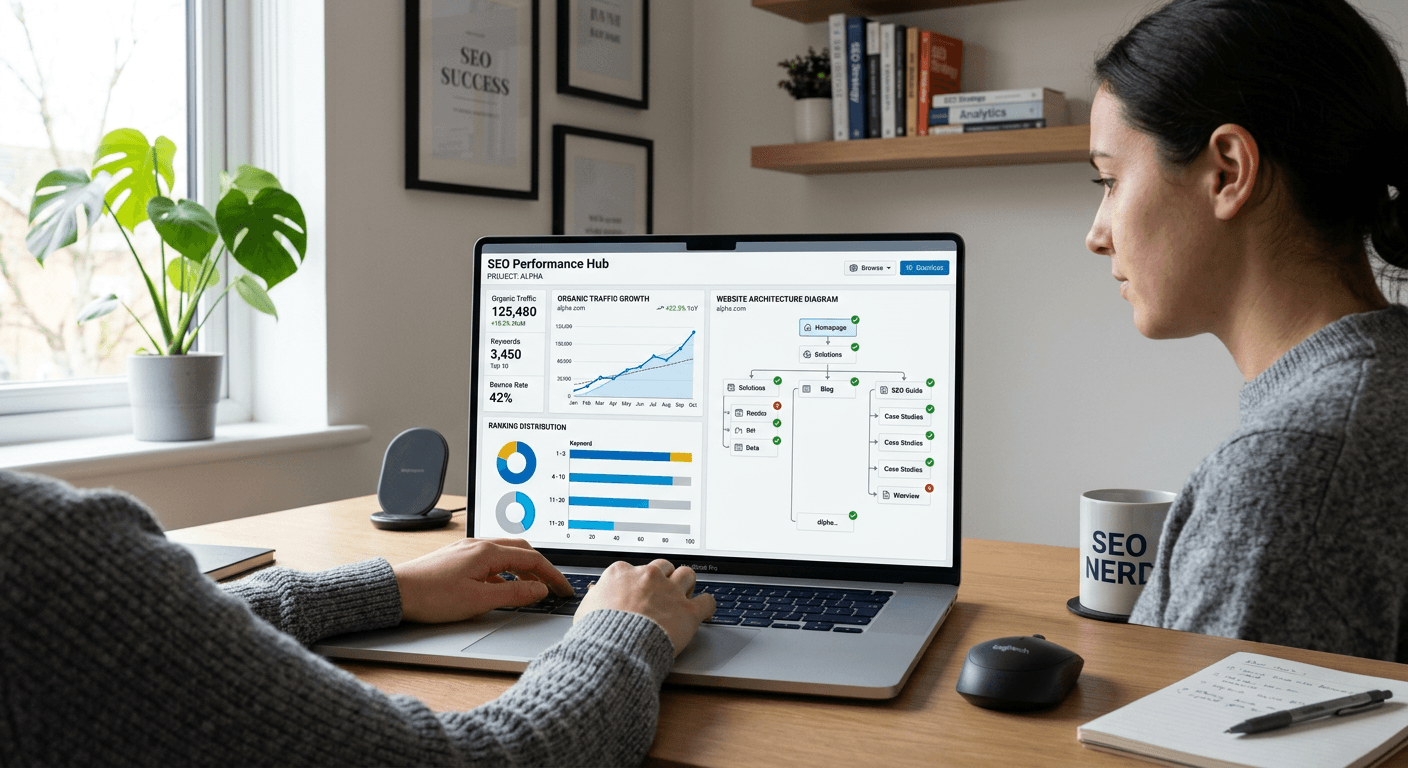
Implementing the best seo marketing strategies requires a shift from chasing search engine algorithms to prioritizing user intent and technical precision. As digital landscapes become increasingly saturated, businesses must adopt a sophisticated approach that balances content relevance with structural integrity. Whether you are building an organic presence from scratch or optimizing established assets, the principles of discoverability remain rooted in high-quality data and human-centric design. You can learn more about how our operational standards apply to these methodologies by visiting our core philosophy.
Quick Summary {#quick-summary}
Best seo marketing involves a holistic synthesis of technical site health, authoritative content creation, and strategic backlink acquisition designed to improve search visibility and user conversion. It moves beyond keyword density to emphasize semantic search relevance, core web vitals, and long-term brand authority in a competitive digital ecosystem.
- Prioritize user intent over mere keyword volume.
- Maintain technical excellence through site speed and mobile optimization.
- Build sustainable authority with high-quality, original content.
- Use data-driven SEO tools for digital marketing to monitor performance metrics.
Table of Contents {#table-of-contents}
- Technical SEO Foundations
- Intent-Driven Content Architecture
- Strategic Link Building
- Optimizing for Semantic Search
- Leveraging Performance Analytics
- User Experience and Core Web Vitals
- Mobile-First Indexing Priorities

Technical SEO Foundations {#technical-seo-foundations}
Technical SEO is the bedrock of any successful digital strategy. It encompasses the behind-the-scenes configuration of your website, ensuring that search engine spiders can crawl, index, and understand your content without friction. Without a clean, fast, and structured technical foundation, even the most compelling content may never reach the top of the search engine results pages (SERPs).
Why this matters is evident in the crawl budget efficiency. If a search engine crawler encounters broken links, redundant redirect chains, or massive unoptimized images, it wastes resources and may abandon your site before indexing your newest updates. Proper site architecture, implemented alongside our defined site terms, ensures that high-value pages receive the authority they deserve, directly impacting your site's overall ranking potential.
Intent-Driven Content Architecture {#intent-driven-content-architecture}
Modern content strategies must align with the user's "search journey." Instead of targeting keywords in isolation, professionals use the best seo marketing techniques to map content to specific intent: informational, navigational, commercial, or transactional. This ensures that every piece of content satisfies the specific question or need a user has at that moment.
This approach matters because it reduces bounce rates and signals relevance to search engines. When a user finds exactly what they need, dwell time increases, and engagement metrics improve. This cycle reinforces to search algorithms that your content is an authoritative resource, preventing the common mistake of publishing thin content that fails to provide a comprehensive answer.
Strategic Link Building {#strategic-link-building}
Link building is the process of acquiring high-quality backlinks from reputable, niche-relevant websites. These links function as digital votes of confidence, signaling to search engines that your content is valuable enough to be cited by others. In a competitive market, having a robust link profile is often the deciding factor in outranking peers.
Real-world impact is significant: high-authority links pass "link equity" to your site, boosting your domain authority. To maintain trust, focus on genuine outreach and unique research pieces that naturally attract backlinks. Avoiding "black hat" shortcuts like link farms or paid link schemes is essential to protect your domain from manual penalties that can tank your search visibility indefinitely.
Optimizing for Semantic Search {#optimizing-for-semantic-search}
Search engines no longer rely strictly on exact-match keywords; they now utilize natural language processing to understand the context and relationships between entities. Semantic search looks at the intent behind a query, meaning you should focus on topical authority rather than repeating a single phrase. This allows you to rank for hundreds of long-tail variations without keyword stuffing.
This matters because it aligns your content with how people actually speak and search. By covering a topic thoroughly and using related entities and schemas, you provide a clear roadmap for search engines. Using standardized privacy practices ensures that your site data and user information remain secure while you focus on building this topical dominance.
Leveraging Performance Analytics {#leveraging-performance-analytics}
One of the most critical aspects of professional SEO is the integration of high-quality seo tools for digital marketing. These platforms provide the granular data necessary to track keyword rankings, identify technical errors, and uncover competitor weaknesses. Relying on gut feeling is rarely effective in the data-rich environment of modern digital marketing.
By leveraging these insights, you can perform A/B testing on meta descriptions or identify "under-performing" pages that could be revitalized with fresh information. Analytics transform the nebulous concept of ranking into a manageable, measurable process, allowing for iterative improvements that compound over time.
User Experience and Core Web Vitals {#user-experience-and-core-web-vitals}
Core Web Vitals - the metrics measuring visual stability, interactivity, and load times - have become formal ranking factors. A site that takes too long to render or jumps around while a user tries to click a button will lose rankings to competitors that offer a smoother, more stable experience.
This matters because user behavior is a proxy for site quality. Search engines prioritize websites that do not force users to wait, as these sites demonstrate professional maintenance and a commitment to customer satisfaction. Investing in optimized hosting and efficient frontend code is a direct investment in your SEO health.
Mobile-First Indexing Priorities {#mobile-first-indexing-priorities}
Because the majority of global web traffic originates on mobile devices, search engines now primarily use the mobile version of a site for indexing and ranking. This shift means that any desktop-only content, or content that is hidden on mobile, will be effectively invisible to search algorithms.
Ensuring a mobile-first design means more than just responsiveness. It requires simplified navigation, touch-friendly interfaces, and ensuring that the content displayed on your mobile view is identical or superior to your desktop view. If your mobile experience is cumbersome, you are losing ranking potential, regardless of the quality of your content.
FAQ {#faq}
- Q: What are the best seo marketing services currently available?
- A: The best services typically offer a combination of technical audits, content strategy, and white-hat link acquisition, rather than "instant ranking" promises.
- Q: Which seo tools for digital marketing are considered essential?
- A: Professionals typically use a mix of site crawlers for technical audits, rank trackers for progress monitoring, and search console integrations for raw indexing data.
- Q: How long does it take to see results from best seo marketing practices?
- A: SEO is a long-term strategy; while technical fixes can have immediate impacts, content authority and backlink growth usually take 3 to 6 months to materialize.