An Overview of Content Marketing Platforms
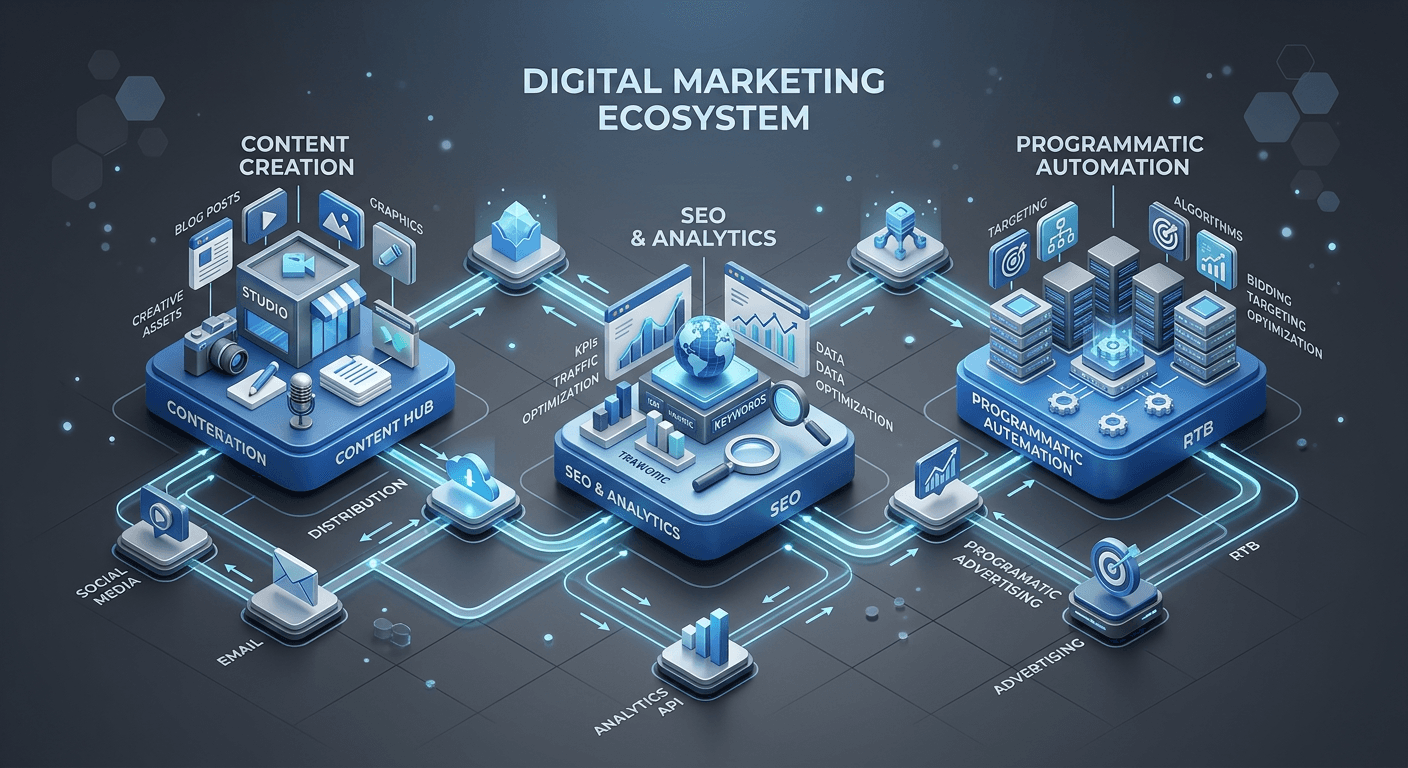
A high-quality content marketing platform serves as the central nervous system for modern digital publishing, enabling teams to plan, create, distribute, and analyze marketing collateral at scale. By consolidating workflows into a single interface, these tools bridge the gap between creative ideation and measurable performance, ensuring that every piece of content aligns with broader organizational goals.
Quick Summary {#quick-summary}
A content marketing platform is a software suite designed to manage the end-to-end lifecycle of content production, from editorial calendaring and collaborative drafting to cross-channel distribution and ROI tracking. It synchronizes marketing teams by centralizing assets and metadata while providing the infrastructure required to execute sophisticated, high-volume digital campaigns efficiently.
- Streamlines collaborative workflows to reduce bottlenecks in production.
- Provides centralized asset management for consistency across channels.
- Enables data-driven optimization through integrated analytics and performance tracking.
- Facilitates complex scheduling across multi-platform ecosystems.
Table of Contents {#table-of-contents}
- The Architecture of Content Marketing Platforms
- Evaluating Leading Solutions and Integrated Ecosystems
- Leveraging SEO and Programmatic Capabilities
- Core Benefits of Centralizing Your Strategy
- Key Technical Considerations for Implementation
- Comparison Table of Marketing Tool Capabilities
- Frequently Asked Questions
- Recommended Reads

The Architecture of Content Marketing Platforms {#the-architecture-of-content-marketing-platforms}
At its core, a content marketing platform acts as the bridge between raw strategy and technical execution. Unlike simple project management software, these platforms are purpose-built for the unique cadence of content production. They typically include features like editorial calendars, approval workflows, and digital asset management (DAM) systems that maintain brand compliance while allowing writers and editors to collaborate in real-time.
When scaling operations, the technical architecture of these platforms becomes paramount. They must support diverse content formats, from long-form articles to social media snippets and technical documentation. By maintaining a single source of truth, teams can ensure that brand guidelines, tone-of-voice documents, and audience personas are baked into every draft. You can learn more about how digital compliance and data structures impact your operations by reviewing our terms of service to understand how centralized data management shapes modern business environments.
Evaluating Leading Solutions and Integrated Ecosystems {#evaluating-leading-solutions-and-integrated-ecosystems}
Enterprise-grade tools, such as the Optimizely content marketing platform, are engineered to handle the complexities of large-scale, multi-departmental organizations. These systems go beyond simple task tracking; they offer robust orchestration engines that manage permissions, version control, and multi-channel publication scheduling. By using advanced solutions, companies reduce the "context switching" that typically drains productivity when teams toggle between separate document editors and scheduling tools.
Choosing a platform often depends on the existing stack of your organization. An ideal platform should function as a connective tissue that pulls data from your CRM, your website analytics, and your social monitoring tools into a unified dashboard. For teams looking to align their growth initiatives with secure data practices, exploring foundational infrastructure at RapidWombat provides valuable insights into how these platforms should integrate with your broader digital presence without compromising privacy or scalability.
Leveraging SEO and Programmatic Capabilities {#leveraging-seo-and-programmatic-capabilities}
Modern content strategies are incomplete without deep integration with search engine optimization. A professional HubSpot SEO tool facilitates keyword research and on-page optimization directly within the content creation flow, ensuring that writers do not have to rely on third-party spreadsheets to assess the potential reach of a topic. This proactive approach to SEO transforms search data into actionable content briefs.
For high-growth websites, a programmatic SEO tool offers a unique advantage by allowing teams to generate and update pages at scale based on structured data sets. Instead of manually writing thousands of landing pages, engineers and marketers can use templated, data-driven frameworks to populate content that addresses highly specific, long-tail search queries. This increases site authority by capturing vast amounts of low-competition keywords that would be impossible to cover through manual editorial efforts alone.
Pro Tip: When selecting an SEO-integrated platform, prioritize tools that offer real-time content scoring. This allows your team to adjust keyword density and structure while they write, rather than performing reactive audits after the content has already been published.
Core Benefits of Centralizing Your Strategy {#core-benefits-of-centralizing-your-strategy}
Centralization is the primary driver of content consistency. When content resides in a fragmented environment, brand voice degrades, and duplicate work becomes an inevitable burden on the team. A unified platform enforces standardized metadata tagging, which ensures that content is discoverable and reusable across multiple departments or global regions. This systematic approach also aids in reporting, as all performance data is mapped to specific campaign assets rather than being lost in disconnected spreadsheets.
Furthermore, centralization enables a clearer view of the customer journey. By connecting your platform to your marketing automation software, you can attribute specific revenue gains to individual pieces of content. This shift from vanity metrics, such as page views, to value-based metrics, like lead conversion, allows for more informed decision-making regarding which content types and topics warrant future investment.
Key Technical Considerations for Implementation {#key-technical-considerations-for-implementation}
Before migrating to a new content marketing platform, you must audit your existing technical debt and data silos. Implementing a new tool involves more than just software migration; it requires a migration of processes and a recalibration of team roles. Ensure the API capabilities of the platform can talk to your CMS, CRM, and analytics engines to guarantee a seamless flow of data.
Security is equally vital. Ensure that the platform adheres to global privacy standards, especially if you are managing customer data or sensitive proprietary research within the environment. Evaluate the platform's support for multi-tenant environments if you have different sub-brands or regional teams, as robust permissioning structures are essential for protecting your intellectual property while fostering collaborative growth.
Comparison Table of Marketing Tool Capabilities {#comparison-table-of-marketing-tool-capabilities}
| Feature | Content Marketing Platform | SEO Tooling | Programmatic Tooling |
|---|---|---|---|
| Workflow Management | High (Built-in) | Low | Moderate |
| SEO Optimization | Moderate | High (Deep Analysis) | High (Automated) |
| Scalability | Moderate (Human-led) | High | Very High (Data-led) |
| Asset Management | High | Low | Moderate |
Frequently Asked Questions {#frequently-asked-questions}
What is the difference between a CMS and a content marketing platform?
A CMS focuses on the storage and display of content on a website, whereas a content marketing platform manages the strategy, planning, creation, and performance analysis that occurs before the content reaches the CMS.
How does a programmatic SEO tool differ from standard SEO software?
Standard SEO software focuses on keyword research and rank tracking, while a programmatic SEO tool uses data sets to automatically generate and deploy large volumes of optimized content pages at scale.
Can a content marketing platform improve team collaboration?
Yes. These platforms provide shared spaces for drafting, automated approval workflows, and version control, which significantly reduce the friction and miscommunication often found in email-based or shared-document workflows.
Is it necessary to have a specialized tool for SEO if the platform is already robust?
While many platforms include basic SEO features, dedicated SEO tools offer deeper competitive intelligence and technical auditing features that are often required for highly competitive search landscapes.