Advanced Techniques for On-Page Seo Optimization
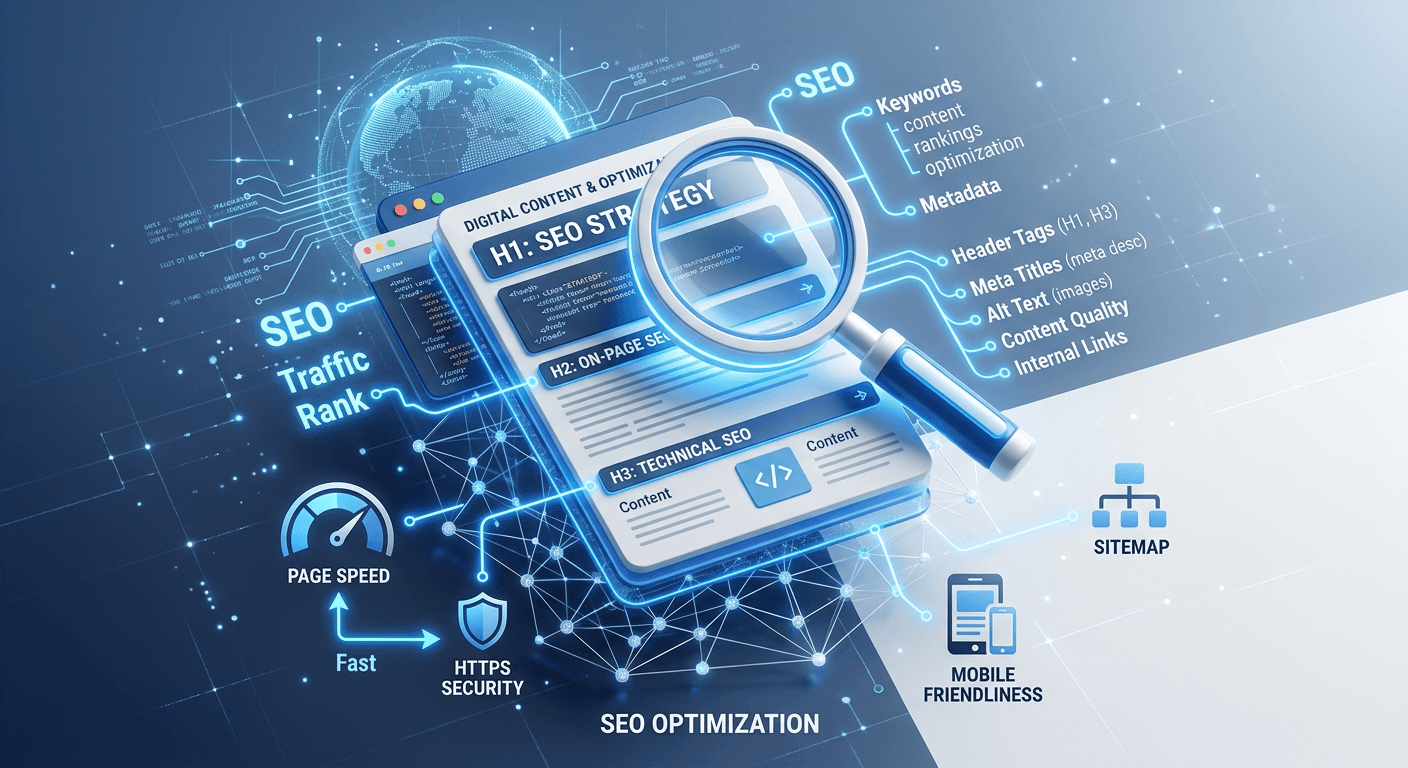
Mastering on-page seo optimization requires a shift from keyword stuffing to a holistic understanding of search intent, page architecture, and user experience. As search engine algorithms become increasingly sophisticated at interpreting natural language, professionals must move beyond simple meta tag adjustments to focus on the semantic relevance of their content. By refining technical elements and aligning page content with precise search intent, webmasters can significantly enhance visibility and user engagement.
Quick Summary {#quick-summary}
On-page SEO optimization is the systematic process of refining individual web pages to improve search engine rankings and increase organic traffic. This involves balancing technical elements, such as schema markup and site speed, with high-quality content that satisfies the specific needs of a searcher for a given query.
- Align content depth with search intent rather than just keyword density.
- Optimize internal page architecture, including URL structures and header tags.
- Leverage technical metadata and site performance for crawlers.
- Improve user engagement metrics to signal content authority to search engines.
Table of Contents {#table-of-contents}
- Quick Summary
- Foundations of On-Page SEO Optimization
- Strategic Keyword Research and Intent
- Technical SEO Factors for Search Engines
- Content Structure and Semantic Relevance
- User Experience and Engagement Signals
- Comparative Analysis of SEO Optimization Tools
- Frequently Asked Questions
- Recommended Reads

Foundations of On-Page SEO Optimization {#foundations-of-on-page-seo-optimization}
On-page SEO optimization is not a static task but an iterative process of aligning your web content with the evolving standards of search engines. At its core, the practice involves configuring HTML source code and on-page elements to signal relevance to crawlers. While backlinks provide authority, on-page optimization defines the contextual framework that helps search engines understand what a page is truly about.
Effective optimization begins with clear site architecture. If search engine bots struggle to crawl your pages or if your hierarchy is illogical, the highest quality content will underperform. Proper usage of crawlable links, canonical tags, and a logical internal linking structure—detailed further in our terms of service—forms the bedrock of a successful search presence.
Strategic Keyword Research and Intent {#strategic-keyword-research-and-intent}
Identifying the right seo keywords requires looking past raw search volume. Modern search engines prioritize 'searcher intent'—the underlying motivation for a query. Whether the user is looking to buy, learn, or navigate, your content must address that goal directly. If you provide a definition for a term when the user is searching for a comparison of products, your page will likely fail to rank.
Mapping Keywords to Intent
- Informational: Articles that answer 'how to' or 'what is' questions.
- Transactional: Content focused on specific product features and pricing.
- Navigational: Pages aimed at helping users reach specific sections of a brand.
Pro Tip: Use long-tail keywords in your subheadings to capture highly specific queries that competitors often ignore. This approach builds topical authority by covering the breadth of a subject, not just the core term.
Technical SEO Factors for Search Engines {#technical-seo-factors-for-search-engines}
Technical performance is no longer optional. A high-quality seo optimizer must account for page speed, mobile responsiveness, and core web vitals. If a page takes more than three seconds to load, bounce rates skyrocket, signaling to search engines that the content does not satisfy user needs. Mobile optimization is equally vital, as search engines prioritize mobile-first indexing.
Security and crawlability are the final pieces of the technical puzzle. Implementing HTTPS, optimizing image file sizes, and using a clean XML sitemap ensure that search bots spend their 'crawl budget' efficiently. Neglecting these technical hygiene factors can result in indexation issues where your best content never appears in search results at all.
Content Structure and Semantic Relevance {#content-structure-and-semantic-relevance}
Content SEO check procedures should prioritize semantic depth. Instead of repeating one keyword, focus on the 'entities' related to your topic. If you are writing about digital marketing, the engine expects to see related terms like 'conversion rates', 'funnel analytics', and 'customer acquisition'. This topical breadth convinces the algorithm that you are a subject-matter expert.
Header tags (H2, H3, etc.) provide the skeletal structure for your content. They act as signposts for both users and crawlers, outlining the flow of information. By placing keywords in headings and ensuring that each section provides unique value, you reinforce the topic clusters that drive long-term organic performance.
User Experience and Engagement Signals {#user-experience-and-engagement-signals}
Search engines use interaction data to validate the quality of a page. Metrics such as 'dwell time', 'click-through rate' (CTR), and 'pogo-sticking' (where a user clicks a result and immediately returns to the search page) act as quality indicators. If your meta description is misleading, you might get clicks, but a high bounce rate will quickly lead to a drop in rankings.
Engagement is also driven by readability and accessibility. Use short paragraphs, bulleted lists, and clear font choices to keep users on the page. If you are ever unsure about data handling for these user metrics, refer to our privacy policy to understand the importance of transparency in data collection.
Comparative Analysis of SEO Optimization Tools {#comparative-analysis-of-seo-optimization-tools}
| Tool Category | Core Function | Best For |
|---|---|---|
| Content Auditors | Analyzing semantic coverage | Improving topical authority |
| Technical Crawlers | Finding broken links/redirects | Site hygiene and health |
| Keyword Researchers | Volume and intent discovery | Content planning |
| Rank Trackers | Monitoring position shifts | Measuring strategy impact |
Selecting the right tools involves identifying where your current gaps exist. Many professionals use an automated seo optimizer to identify missing secondary keywords, but rely on manual review for readability. The goal is to let technology handle the data-heavy tasks so you can focus on writing content that resonates with human readers.
Frequently Asked Questions {#frequently-asked-questions}
How often should I update my content for SEO?
Content should be updated whenever the information becomes outdated or when search intent shifts. A quarterly content audit is usually sufficient to maintain relevance.
Does meta tag stuffing still work?
No. Modern search engines penalize keyword stuffing. Meta tags should be written for humans to entice a click, not to trick the algorithm.
What is the most important factor in on-page SEO?
Search intent is the most critical factor. If your page does not satisfy what the user is looking for, other technical optimizations will have limited impact.
Can I rank without backlinks if my on-page SEO is perfect?
While it is possible for low-competition keywords, high-authority terms almost always require a combination of excellent on-page structure and strong off-page credibility.